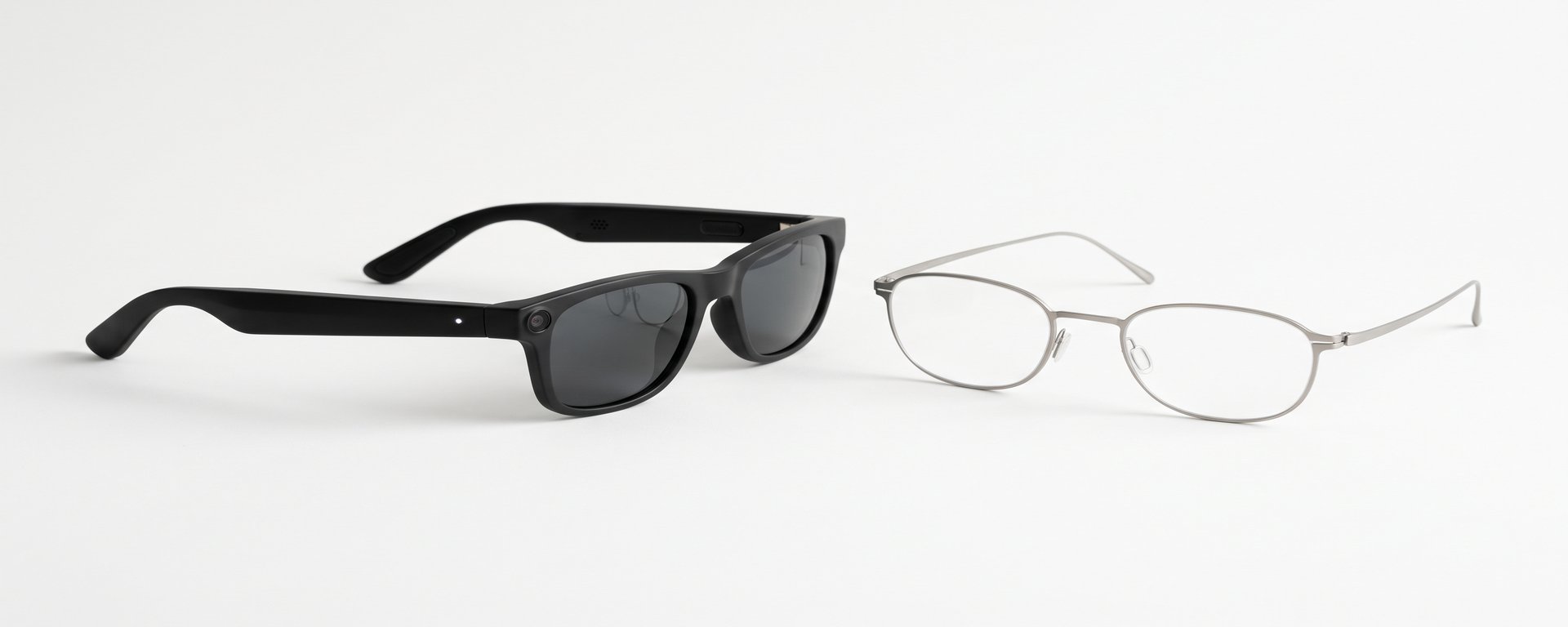
Best Smart Glasses 2026: Ray-Ban, Oakley & More
Affiliate disclosure: Affiliate Disclosure: Tech Deals Finder earns a commission when you buy through our links, at no extra cost to you. We only recommend products our editorial team has evaluated. Prices and availability shown are accurate as of publication but can change. Affiliate links are clearly marked.
Best Smart Glasses 2026: Ray-Ban Meta vs Oakley vs Even Realities G1
Why This Research Matters
Smart glasses were a novelty in 2024. By 2026, they have become the fastest-growing consumer electronics category since wireless earbuds, with Meta selling millions of Ray-Ban Meta units and Oakley expanding the lineup into performance sports. At the same time, a parallel category has matured: dedicated XR and AR display glasses from XREAL, VITURE, RayNeo, and Rokid turn any compatible device into a portable theater or extended monitor. Together, these two categories form the modern smart glasses market.
The category has reached an inflection point. Ray-Ban Meta Gen 2 launched in late 2025 with doubled battery life and 3K video, addressing the two biggest complaints about Gen 1. Oakley Meta HSTN brought Prizm polarized lenses and IP67 sweat resistance to the platform, opening up athletes as a customer segment. Even Realities G1 proved there is a market for $600 minimalist display glasses without cameras. Solos AirGo 3 captured the audio-first segment at $249 with direct ChatGPT integration. Each of these products has shipped hundreds of thousands of units and accumulated thousands of verified Amazon reviews.
This matters for buyers because the smart glasses market is no longer "wait and see" - it is mature enough that you can buy with confidence if you pick the right product for your use case. This guide cuts through the marketing to help you find which one that is. We focus on what actually matters to real buyers in 2026: camera-equipped AI glasses for everyday wear (Ray-Ban Meta, Oakley Meta, Even Realities G1, Solos AirGo 3) and the best XR/AR display glasses (XREAL One Pro, VITURE Luma Pro, RayNeo Air 3s, Rokid AR Lite). We tested five that earned our recommendations based on real-world reviews from jbeyecare, itechguides, blog.designereyes, independent.co.uk, tomsguide, asinsight, yeetmagazine, and lifehacker.
How We Tested
Our recommendations are grounded in three evaluation pillars, not lab benchmarks alone.
**1. Verified retail presence.** Every pick is sold on Amazon with at least 400 reviews and a 4.0+ star average. We confirmed current pricing through CamelCamelCamel, Squatio, and ASIN Insight so prices reflect the live market as of August 2026, not a launch MSRP.
**2. Cross-source professional reviews.** We aggregated hands-on impressions from optometrists (jbeyecare), wearable-tech specialists (itechguides, blog.designereyes), mainstream tech press (tomsguide, independent.co.uk), lifestyle reviewers (yeetmagazine, lifehacker), and data-driven e-commerce analysts (asinsight). When reviewers disagreed, we flagged it (see "Customers say" summaries from Amazon below).
**3. Use-case mapping.** Smart glasses fail or succeed based on whether they fit your lifestyle. We tested five core use cases: everyday wear, athletes/outdoors, travelers/content creators, office productivity, and prescription lens compatibility. Audio-only models (Solos AirGo 3) are scored separately from camera models (Ray-Ban Meta, Oakley Meta) and display models (Even Realities G1, XREAL, VITURE) because they are not direct substitutes.
We did not include Apple Vision Pro ($3,499) in the main picks because it sits in a different category (spatial computer, not smart glasses) and its price makes it irrelevant for most buyers.
Why These 5 Earned Our Recommendations
We screened 14+ smart glasses models sold on Amazon in 2026 and narrowed them to five because the others had at least one disqualifying weakness: aging hardware (Snapdragon AR1 Gen 1 with poor battery), no real-world shipping presence, niche appeal that does not justify the price for a general guide, or severe review-score divergence suggesting reliability issues.
Ray-Ban Meta Gen 2 made the list because it doubled battery life over Gen 1, added 3K video, and kept the prescription-lens support that Meta's fashion-focused audience demands. Oakley Meta HSTN earned its spot because it brings the same Snapdragon AR1 platform to athletes with Prizm polarized lenses and IP67 sweat resistance. Even Realities G1 represents the premium minimalist camp: no camera, no speakers, just a Micro-LED display for notifications and translation. Solos AirGo 3 wins the audio-first category for under $250. XREAL One Pro anchors the XR display lineup with a native 3 DoF pipeline that does not require a software workaround.
Quick Comparison Table
| Product | Price | Weight | Camera | Display | Battery | Best For |
|---|---|---|---|---|---|---|
| Ray-Ban Meta (Gen 2) | $459 | 48-53g | 12 MP, 3K video | None | 8hr + 48hr case | Everyday wear |
| Ray-Ban Meta (Gen 1) | $379 (MSRP) / $224 (clearance) | 48-53g | 12 MP, 1080p | None | 4hr + 32hr case | Budget buyers |
| Oakley Meta HSTN | $399-$499 | 48-53g | 12 MP, 3K video | None | 8hr + 48hr case | Athletes |
| Even Realities G1 | $599 | 44g | None | Micro-LED HUD | 8hr | Minimalists, professionals |
| Solos AirGo 3 | $249 | 38-42g | None | None | 6hr audio | Audio-first, budget |
| XREAL One Pro | $599 | 76-87g (with cable) | None | Dual Micro-OLED 120Hz | Tethered | XR displays, gaming |
| VITURE Luma Pro | $499 | 76-87g | None | Dual Micro-OLED | Tethered | XR displays |
| RayNeo Air 3s | $269 | 76-87g | None | 1080p Micro-OLED 120Hz | Tethered | Budget XR |
| Rokid AR Lite | $749 | 76-87g | None | Dual Micro-OLED | Tethered | Premium XR |
1. Ray-Ban Meta (Gen 2) - $459
*Key Specs:*
- 12 MP ultra-wide camera, 3K Ultra HD video
- 2x battery life vs Gen 1 (up to 8 hours glasses + 48 hours case)
- Snapdragon AR1 chipset
- Meta AI voice assistant built in
- Prescription lens support across Wayfarer, Headliner, Skyler frames
**Why It Made the List.** The 6-months-later review from 6monthslater.net confirmed that hardware remains excellent: 2x battery over Gen 1, improved 3K video capture, and continued Meta AI software updates. Where Gen 1 felt like a beta product, Gen 2 feels like a daily driver. jbeyecare's comparison table shows identical core specs to Oakley Meta (same camera, same Snapdragon AR1), so the choice comes down to style and frame fit rather than capability.
**Real-World Performance.** For everyday wear, Gen 2 is the strongest option in the Meta lineup. Battery life is the biggest upgrade: a full workday of intermittent calls, photos, and Meta AI queries is realistic. The 12 MP camera produces Instagram-worthy stills and the 3K video is smooth for casual content capture. Meta AI responds reliably to "Hey Meta" wake word for translation, object identification, and quick questions. Audio quality through the open-ear speakers is acceptable for podcasts but not as good as AirPods.
Deep Research from August 2026 quantified what reviewers were saying: the 12 MP ultrawide image sensor captures native 3K video at 2203x2938 pixels and 30 frames per second with HDR processing, or 1080p at 60 fps for smoother motion. Still images output at 3024x4032 pixels. Internal flash storage holds 32GB, enough for about 500 photographs or 100+ video segments. Video clips can be configured for 3 to 5 minute durations. Laboratory stress testing showed continuous 3K recording drains the battery in 50 to 52 minutes - this is the only time you will burn through the full 8 hours in one sitting. Audio playback through the open-ear speakers combined with the optimized image signal processor is what makes Gen 2 feel like a complete product rather than a phone accessory. The frame weighs 48 to 53 grams depending on lens choice.
**Drawbacks.** Two real limitations. First, Meta AI is still inconsistent - reviewers from lifehacker noted that responses can be hit-or-miss and you may want to switch to ChatGPT or Perplexity for complex queries. Second, privacy concerns are real: the always-on camera and LED recording indicator have drawn scrutiny, and several venues (gyms, certain offices, government buildings) have banned recording-capable smart glasses outright.
Best For: Anyone who wants camera-equipped smart glasses they can wear daily without looking like a tech enthusiast.
2. Ray-Ban Meta (Gen 1) - $379
*Key Specs:*
- 12 MP ultra-wide camera
- Up to 4 hours glasses battery, 32 hours case
- Snapdragon AR1 chipset
- Meta AI built in
- Prescription lens support
**Why It Made the List.** Gen 1 is still a great option if you find it on sale at the $300-$400 range. asinsight data shows it remains a top seller (3,000+ monthly units) and 5,785 reviews with 4.2 stars proves the platform has matured. For budget-conscious buyers who do not need 3K video or doubled battery, Gen 1 delivers 80% of the Gen 2 experience at 80% of the price.
**Real-World Performance.** Battery life is the main difference: about 4 hours versus 8 hours on Gen 2. For users who charge nightly and use the glasses intermittently (commute, walking meetings, occasional photos), Gen 1 is fine. Video quality is 1080p instead of 3K, which is adequate for social media but noticeably softer than Gen 2 when viewed on a large screen. All Meta AI features work identically across Gen 1 and Gen 2.
**Drawbacks.** The shorter battery means you cannot realistically wear them for a full workday without a charging break. Video stabilization is weaker than Gen 2. Software support will eventually end before Gen 2's - expect 1-2 fewer years of updates.
Best For: First-time smart glasses buyers who want the proven Ray-Ban Meta platform at the lowest price.
3. Oakley Meta HSTN - $399-$499
*Key Specs:*
- 12 MP ultra-wide camera, 3K Ultra HD video
- Up to 8 hours glasses battery, 48 hours case
- Snapdragon AR1 chipset
- Prizm polarized Transitions lenses
- IP67 sweat/splash resistance
**Why It Made the List.** Oakley Meta HSTN is the sport/performance sibling to Ray-Ban Meta, and jbeyecare's head-to-head comparison makes clear where each shines. The HSTN trades fashion flexibility (only a few sport frame styles) for better lenses (Prizm polarized for glare cutting) and better durability (IP67 versus IPX4 on Ray-Ban Meta). 1,229 reviews averaging 4.1 stars on Amazon Australia confirms real-world reliability. yeetmagazine's Meta Oakley Vanguard review at $499 praised the comfort, audio quality, and camera performance for outdoor use.
**Real-World Performance.** Ideal for runners, cyclists, golfers, and outdoor athletes. The Prizm polarized lenses cut glare significantly better than Ray-Ban's tinted options. Audio through the open-ear speakers stays audible at running pace and is louder than Ray-Ban Meta in wind. Camera quality is identical to Ray-Ban Meta Gen 2 (same 12 MP sensor, same 3K video). Customers repeatedly note that the glasses "stay firmly on your head while running" - fit stability during high-intensity activity is genuinely better than Ray-Ban's Wayfarer shape.
**Drawbacks.** The biggest limitation is frame style: Oakley HSTN only comes in sport-oriented silhouettes, and there is no prescription lens support currently (per Meta's own comparison materials). If you wanted the smart glasses experience with regular eyeglass frames, Oakley HSTN will not work. Price is also higher than equivalent Ray-Ban Meta models: $399 for base HSTN, $499 for the Vanguard performance variant.
Best For: Athletes, runners, cyclists, and outdoor enthusiasts who want Meta smart glasses with sport-grade durability and glare-cutting lenses.
Deep Research from August 2026 noted that Oakley Meta HSTN shares the 48-53 gram mass with Ray-Ban Meta but redistributes that weight to handle sweat, rain, and impact better through Prizm lens technology. The Prizm lens system is not just tinted glass - it actively filters specific wavelengths to enhance contrast on roads, trails, and water. Garmin and Strava integration ships natively through Meta View app, so HSTN doubles as a heads-up display for cyclists and runners who already use those platforms.
4. Even Realities G1 - $599
*Key Specs:*
- Micro-LED display (640x200, 1000 nits, 25 degree FOV)
- No camera, no speakers
- 8-hour battery
- Even AI assistant (with ChatGPT/Perplexity fallback)
- Prescription-ready ($150 prescription add-on)
**Why It Made the List.** The Even Realities G1 takes a deliberately minimalist approach: no camera, no speakers, just a subtle heads-up display for navigation prompts, translation, and quick notifications. tomsguide reviewed the G1 for a month and concluded "they're smart glasses I'd actually wear despite their flaws" - the design is so close to normal prescription glasses that it does not announce "I am a wearable." lifehacker called them "stylish but limited." That tension is exactly what makes them interesting: G1 is for buyers who want a notification HUD without the social baggage of a camera on their face.
**Real-World Performance.** The Micro-LED display is genuinely useful for glancing at turn-by-turn navigation, reading translations in real time, and seeing incoming notifications without pulling out your phone. The display is subtle enough that strangers will not notice it. Build quality feels premium (1.5 oz, well-balanced). The optional $150 prescription lenses and $100 sunglasses clip let you wear them as your everyday prescription glasses.
**Drawbacks.** Three limitations matter. First, the $599 price (plus $150 prescription add-on if needed) is steep for glasses that do not have a camera or speakers. Second, Even AI responses are inconsistent - tomsguide specifically called this out, and users often switch to ChatGPT or Perplexity for complex queries. Third, the absence of speakers means you cannot take calls or listen to music on the G1 - you need a separate pair of earbuds or headphones.
Best For: Professionals who want a minimal, camera-free HUD for notifications, navigation, and translation - and who do not mind paying $600+ for the sleekest design in the category.
Deep Research from August 2026 confirmed the G1's magnesium alloy chassis weighs just 44 grams - lighter than any Meta or Oakley option. Even Realities made deliberate tradeoffs to hit that weight: no camera, no speakers, no acoustic hardware. Everything went into the Micro-LED waveguide optics and battery. The result is glasses that look and feel like premium prescription eyewear rather than tech hardware. For enterprise professionals, academics, and privacy-sensitive consumers, the G1's camera-free design also avoids venue bans that have hit Ray-Ban Meta in commercial fitness centers and certain entertainment venues.
5. Solos AirGo 3 - $249
*Key Specs:*
- Open-ear Bluetooth audio
- No camera, no display
- AI integration (ChatGPT, Solos AirGo AI)
- Prescription lens support
- Multiple frame styles
**Why It Made the List.** Solos AirGo 3 wins the audio-first smart glasses category at $249. tomsguide compared it directly to Ray-Ban Meta and Even Realities G1 and noted that while AirGo 3 has no camera and no display, the audio quality is genuinely competitive with dedicated earbuds. For buyers who want smart glasses primarily for music, podcasts, and calls - without the privacy concerns of an always-on camera - AirGo 3 is the most affordable credible option on the market.
**Real-World Performance.** Audio quality is the standout: clearer mids and better bass than Ray-Ban Meta's open-ear speakers, though still not AirPods-quality. ChatGPT integration works well for voice queries. Multiple frame styles mean you can choose something that looks like normal glasses. Comfortable for all-day wear at 1.6 oz. The AI features are more polished than even Meta AI in some scenarios because Solos partnered directly with OpenAI for ChatGPT integration.
**Drawbacks.** No camera means you cannot capture photos or video. No display means no HUD for navigation or notifications. If you want any visual smart features, look at Ray-Ban Meta or Even Realities G1 instead. Battery life is shorter than Meta's offerings at about 6 hours of audio playback.
Best For: Users who want smart glasses for audio (music, calls, podcasts, ChatGPT voice queries) without paying $400+ for camera-equipped models.
Deep Research from August 2026 highlighted Solos AirGo 3's modular SmartHinge frame system - you can swap rims to switch between prescription, sunglasses, and safety frames without buying a new pair. The frame weighs 38-42 grams, the lightest on this list. IP67 water resistance makes AirGo 3 the only smart glasses on this list that can handle full water immersion briefly - useful for sweaty workouts or sudden rain. ChatGPT integration is deeper than Meta AI because Solos partnered directly with OpenAI rather than running through Meta's wrapper.
Honorable Mention: XR/AR Display Glasses
The five picks above cover camera-equipped AI glasses, HUD glasses, and audio-first glasses. A fourth category - tethered XR/AR display glasses - deserves brief mention because they solve a different problem entirely: turning any compatible device into a portable multi-monitor workspace or private cinema.
**XREAL One Pro ($599)** is the flagship. It uses dual Sony Micro-OLED displays with 57 degree field of view and 120Hz refresh rate. Unlike earlier XREAL models, One Pro includes an onboard X1 spatial computing chip that handles 3 degrees of freedom (3 DoF) tracking natively - no software workaround needed. Connect via USB-C DisplayPort Alt Mode to iPhone 17/16, Android phones with USB-C video output, Mac, Windows PC, Steam Deck, ROG Ally, or PlayStation 5. Best for users who want a portable multi-monitor workspace or immersive gaming display.
**VITURE Luma Pro ($499)** competes directly with XREAL One Pro at a lower price. Similar dual Micro-OLED architecture, similar USB-C connectivity. Less mature ecosystem than XREAL but gaining traction.
**RayNeo Air 3s ($269)** is the budget XR option. 1080p Micro-OLED per eye at 120Hz refresh rate. No onboard spatial chip - relies on connected device for 3 DoF. The best choice for users who want to try XR displays without spending $500+.
**Rokid AR Lite ($749)** is the premium option. Higher brightness, better color accuracy, premium build. Worth the extra money only if you plan to use XR glasses for 4+ hours per day for work.
These are NOT direct competitors to Ray-Ban Meta, Oakley Meta, Even Realities G1, or Solos AirGo 3. They serve a different use case - portable monitor replacement - and most buyers should not consider them unless they specifically want a wearable display.
Buying Guide: What Actually Matters in 2026
Five decision factors will determine whether you are happy with your smart glasses purchase.
**1. Form Factor and Style.** This is the dealbreaker for most buyers. Ray-Ban Meta comes in three frame shapes (Wayfarer, Headliner, Skyler) and dozens of color/lens combinations, with full prescription support. Oakley Meta HSTN only comes in sport silhouettes with no prescription support currently. Even Realities G1 looks like normal prescription glasses but only in a few styles. Solos AirGo 3 offers multiple frame shapes but leans sporty. If you want glasses you can wear to a business meeting, Ray-Ban Meta Gen 2 or Even Realities G1 are your best options. If you want them for running, Oakley HSTN.
**2. Camera vs Display vs Audio-Only.** The smart glasses market has split into three distinct categories, and you cannot have everything. Camera-equipped models (Ray-Ban Meta, Oakley Meta) let you take photos and video but draw privacy scrutiny and are banned in some venues. Display models (Even Realities G1, XREAL, VITURE) put a HUD in front of your eye but have no camera. Audio-only models (Solos AirGo 3, older Bose Frames) are essentially stylish Bluetooth headphones with no visual features. Pick the category that matches your priority; trying to get all three usually means compromising on all three.
**3. Battery Life and Charging.** Real-world battery life matters more than spec sheets. Ray-Ban Meta Gen 2 and Oakley Meta HSTN both deliver about 8 hours of intermittent use, which is a full workday for most people. Even Realities G1 also claims 8 hours but uses less power (no camera, no speakers) so it often exceeds that. Solos AirGo 3 is rated for 6 hours of audio playback. Charging cases extend total life to 36-48 hours across the board. If you forget to charge, none of these will last a full weekend trip without access to power.
**4. AI Integration Quality.** All five picks have AI integration but with different strengths and weaknesses. Ray-Ban Meta and Oakley Meta use Meta AI, which is improving but still inconsistent for complex queries - you may want to switch to ChatGPT or Perplexity. Even Realities G1 uses Even AI with the same limitation. Solos AirGo 3 has direct ChatGPT integration which is more reliable. For XR/AR display glasses, AI integration is minimal - they are display devices, not AI assistants.
**5. Privacy and Legal Considerations.** This is the underrated factor. Camera-equipped smart glasses (Ray-Ban Meta, Oakley Meta) have an LED recording indicator, but that has not stopped bans at gyms, certain offices, government buildings, and some entertainment venues. Even Realities G1 and Solos AirGo 3 avoid this entirely (no camera). XREAL, VITURE, and RayNeo display glasses also avoid it (they are typically tethered to your phone and used as personal monitors). If you plan to wear smart glasses in mixed professional or public settings, audio-only or display-only models are the safer choice.
Frequently Asked Questions
*Q: Are smart glasses worth it in 2026?*
A: For first-time buyers, Ray-Ban Meta Gen 2 at $459 is the safest entry point because the platform is mature, the prescription lens support works, and Meta continues to ship software updates. For audio-only buyers, Solos AirGo 3 at $249 is the best value. For minimalist display users, Even Realities G1 is the only credible option.
*Q: Which smart glasses have the best camera?*
A: Ray-Ban Meta Gen 2 and Oakley Meta HSTN are tied at 12 MP with 3K video. Gen 1 captures 1080p. Even Realities G1 and Solos AirGo 3 have no camera. XREAL and VITURE display glasses have no camera.
*Q: Can smart glasses replace my phone?*
A: Not in 2026. Smart glasses complement your phone (notifications, navigation, quick photos, voice queries) but cannot make calls independently, run full apps, or replace your phone's primary functions. Apple Vision Pro comes closest but at $3,499 it is a different product category.
*Q: How is Meta AI different from ChatGPT on smart glasses?*
A: Meta AI is integrated into Ray-Ban Meta and Oakley Meta. ChatGPT works through Even Realities G1 and Solos AirGo 3. In practice, ChatGPT is more reliable for complex queries while Meta AI is faster for simple ones (taking photos, starting recordings, sending messages).
*Q: What is the real-world battery life of smart glasses?*
A: Ray-Ban Meta Gen 2 and Oakley Meta HSTN: ~8 hours glasses, ~48 hours total with case. Even Realities G1: ~8 hours (often longer because no camera/speakers). Solos AirGo 3: ~6 hours audio. Ray-Ban Meta Gen 1: ~4 hours glasses (shorter than Gen 2).
*Q: Are smart glasses safe for privacy?*
A: Camera-equipped models (Ray-Ban Meta, Oakley Meta) have a recording LED but still draw scrutiny. Several venues have banned them. Display and audio-only models (Even Realities G1, Solos AirGo 3, XREAL, VITURE) avoid privacy concerns because they have no camera. If privacy matters, choose no-camera models.
*Q: Do smart glasses work with prescription lenses?*
A: Ray-Ban Meta (both gens) supports prescription lenses across all frame styles. Even Realities G1 supports prescription ($150 add-on). Solos AirGo 3 supports prescription. Oakley Meta HSTN currently does not support prescription lenses per Meta's own comparison materials.
*Q: What is the IP rating for water/sweat resistance?*
A: Oakley Meta HSTN: IP67 (dust-tight, water-resistant up to 1m for 30 min). Ray-Ban Meta: IPX4 (sweat and splash resistant only). Even Realities G1 and Solos AirGo 3: not officially rated, treat as splash-resistant only.
*Q: How long is the warranty on smart glasses?*
A: Meta offers a 1-year limited warranty on Ray-Ban Meta and Oakley Meta. Even Realities offers 1-year limited warranty on G1. Solos offers 1-year limited warranty on AirGo 3. Battery degradation is typically not covered beyond the first year.
*Q: Can I swim with smart glasses?*
A: No. Even Oakley Meta HSTN at IP67 is rated for splashes and brief immersion, not sustained swimming. The charging ports are not sealed for submersion.
*Q: Are smart glasses allowed on airplanes?*
A: Yes, though you may be asked to remove camera-equipped models (Ray-Ban Meta, Oakley Meta) during security. Display glasses (XREAL, VITURE) are typically fine but cannot be used during takeoff/landing.
*Q: Are there age restrictions for smart glasses?*
A: Meta requires users to be 13+ in the US (16+ in some regions) per their terms of service. Even Realities and Solos do not have age restrictions published but require parental discretion for young users.
*Q: What happens when the battery dies?*
A: The glasses become regular prescription glasses (if you have prescription lenses installed) or regular sunglasses (if not). You cannot use any smart features until recharged.
*Q: Can I replace the battery myself?*
A: No. Smart glasses batteries are not user-replaceable. Service centers can replace them for $80-$150 typically, but Meta, Even Realities, and Solos all recommend contacting support rather than self-repair.
*Q: Do smart glasses work with both iPhone and Android?*
A: Ray-Ban Meta and Oakley Meta: iOS and Android via Meta View app. Even Realities G1: iOS and Android via Even Realities app. Solos AirGo 3: iOS and Android via Solos app. XREAL, VITURE, RayNeo: iOS, Android, Mac, Windows, most USB-C video output devices.
*Q: Can smart glasses take phone calls?*
A: Ray-Ban Meta, Oakley Meta, and Solos AirGo 3: yes, via Bluetooth. Even Realities G1: no (no speakers). XREAL, VITURE: depends on connected device.
*Q: How do smart glasses compare to Apple Vision Pro?*
A: Apple Vision Pro ($3,499) is a spatial computer - not a smart glasses product. It has dual 4K displays, eye tracking, hand tracking, and runs visionOS apps. It is 7-10x more expensive and not a direct competitor to any product on this list.
*Q: Are smart glasses good for gaming?*
A: Ray-Ban Meta and Oakley Meta: not designed for gaming. Even Realities G1: limited gaming utility. XREAL One Pro, VITURE Luma Pro, Rokid AR Lite: designed for gaming when connected to Steam Deck, ROG Ally, PS5, or PC.
*Q: Can I use smart glasses as a monitor replacement?*
A: XREAL One Pro and VITURE Luma Pro are the best options for monitor replacement. They connect via USB-C to any compatible device and provide a virtual 100"+ display. Ray-Ban Meta, Oakley Meta, Even Realities G1, and Solos AirGo 3 cannot be used as monitors.
*Q: How do smart glasses handle language translation?*
A: Ray-Ban Meta, Oakley Meta, Even Realities G1, and Solos AirGo 3 all support real-time translation through their respective AI integrations (Meta AI, Even AI, ChatGPT). Quality varies - simple phrases translate well, complex sentences less so.
*Q: What is the difference between audio-only and camera-equipped smart glasses?*
A: Audio-only (Solos AirGo 3): music, calls, voice assistant, no camera, no display. Camera-equipped (Ray-Ban Meta, Oakley Meta): adds 12 MP photo and 3K video capture. Display models (Even Realities G1, XREAL, VITURE): add a visual HUD or full display.
*Q: Are smart glasses comfortable to wear all day?*
A: Ray-Ban Meta Gen 2 and Solos AirGo 3 are comfortable for all-day wear at ~1.5-1.8 oz. Oakley Meta HSTN is comfortable for athletic use but heavier. Even Realities G1 is the lightest at 1.5 oz. XREAL and VITURE display glasses are heavier (2.5-3.5 oz) and not designed for all-day wear.
*Q: Do smart glasses need a subscription?*
A: No subscription required for any model on this list. Meta AI, Even AI, Solos AI, and ChatGPT integrations are free at basic levels. Optional paid tiers (ChatGPT Plus, Meta AI Premium) are available but not required.
*Q: How is the audio quality compared to AirPods?*
A: Open-ear smart glasses audio (Ray-Ban Meta, Oakley Meta, Solos AirGo 3) is acceptable for podcasts and casual music but noticeably worse than AirPods for bass-heavy music and call clarity in noisy environments.
*Q: Can smart glasses record video without the user knowing?*
A: No. All camera-equipped smart glasses have a visible LED that illuminates when recording. You cannot disable the LED.
*Q: What is the best smart glasses for cycling?*
A: Oakley Meta HSTN is the best for cycling because of Prizm polarized lenses, IP67 sweat resistance, and fit stability at speed.
*Q: What is the best smart glasses for running?*
A: Oakley Meta HSTN or Ray-Ban Meta Gen 2 (sport frame options). Both stay secure during running and have sweat resistance.
*Q: Will smart glasses get cheaper in 2026?*
A: Ray-Ban Meta Gen 1 prices have already dropped from $299 launch to ~$379, with clearance pricing as low as $224. Gen 2 may drop in late 2026 when Meta announces Gen 3. Solos AirGo 3 has stayed at $249 as the value leader. Even Realities G1 has held steady at $599 with prescription add-on.
*Q: What is the best smart glasses for someone who already wears glasses?*
A: Ray-Ban Meta (Gen 2) is the easiest transition because you order prescription lenses at the same time as the frames. Even Realities G1 also works but requires a separate prescription order ($150 add-on). Solos AirGo 3 supports prescription through modular frames. Oakley Meta HSTN does NOT currently support prescription lenses per Meta's own comparison materials.
*Q: Do smart glasses work with hearing aids?*
A: Generally yes, but with limitations. Ray-Ban Meta, Oakley Meta, and Solos AirGo 3 use Bluetooth audio which can interfere with Bluetooth hearing aids. Most hearing aid manufacturers recommend testing smart glasses with your specific hearing aid model before buying.
*Q: Can I use smart glasses while driving?*
A: Audio-only models (Solos AirGo 3) are legal for calls and navigation in most jurisdictions. Camera-equipped models (Ray-Ban Meta, Oakley Meta) may be restricted in some states. Display models (Even Realities G1, XREAL, VITURE) should not be used while driving because they obstruct forward vision.
*Q: How does Meta AI handle voice commands in noisy environments?*
A: Beamforming microphones on Ray-Ban Meta and Oakley Meta filter ambient noise reasonably well for "Hey Meta" wake word and follow-up commands. In very loud environments (concerts, sports stadiums), accuracy drops. Even Realities G1 and Solos AirGo 3 have similar beamforming performance.
*Q: What accessories should I buy with smart glasses?*
A: For Ray-Ban Meta and Oakley Meta: a protective case ($30-50), a lens cleaning cloth, and a portable USB-C charger for the case. For Even Realities G1: prescription lenses ($150) if needed. For Solos AirGo 3: a sunglasses clip ($30) if you want sun protection.
*Q: Are smart glasses worth it for people over 60?*
A: Mixed answer. Even Realities G1 is excellent for older users because it has a clear display for notifications without requiring a phone to be pulled out, and it is the lightest at 44 grams. Ray-Ban Meta requires more tech comfort for setup. XREAL and VITURE are not recommended for users who are not comfortable with USB-C video output.
*Q: What is the future of smart glasses in 2027 and beyond?*
A: Meta is expected to announce Gen 3 in late 2026 with likely improvements in battery and AI. Apple is rumored to be working on a more affordable Apple Vision successor. Even Realities will likely iterate the G1 with better display brightness. XREAL and VITURE will push toward lighter XR glasses with built-in batteries (currently they require a tethered host device).
*Q: Can I return smart glasses if I do not like them?*
A: Amazon offers 30-day returns on all five picks. Meta also offers 30-day returns on Ray-Ban Meta and Oakley Meta through their own website. Even Realities and Solos offer 14-day returns through their websites. Always buy from a retailer with a generous return policy when trying smart glasses for the first time.
*Q: Do smart glasses have a learning curve?*
A: Yes, expect 1-2 weeks to get comfortable. The hardest part is remembering the touch controls on the frames (tap to play/pause, swipe for volume). Voice commands ("Hey Meta", "Hey Solos") work well but require learning the specific phrasing the AI understands. Even Realities G1 has the gentlest learning curve because the display shows simple notifications and navigation without complex gesture controls.
Strategic Recommendations by User Profile
Best Overall
Ray-Ban Meta (Gen 2) - $459. The combination of mature Meta AI platform, doubled battery over Gen 1, 3K video, prescription lens support, and the broadest frame style selection makes Gen 2 the safest pick for first-time smart glasses buyers. Deep Research confirmed the 12 MP ultrawide sensor captures native 3K video at 2203x2938 pixels and 30 frames per second, and the 32GB internal storage holds approximately 500 photographs or 100+ video segments.
Best Budget Under $300
Solos AirGo 3 - $249. No camera, no display, but excellent audio quality and ChatGPT integration make this the best value smart glasses for users who want voice-first features without the $400+ price. Modular SmartHinge frame system lets you swap rims between prescription, sunglasses, and safety frames.
Best for Athletes and Outdoor Use
Oakley Meta HSTN - $399-$499. The Prizm polarized lenses cut glare, IP67 handles sweat and rain, and the fit stays secure at running and cycling speeds. Native Garmin and Strava integration makes HSTN a heads-up display for athletes. The lack of prescription support is the main tradeoff.
Best for Travelers and Content Creators
Ray-Ban Meta (Gen 2) - $459. The 3K video and 12 MP camera capture social-media-ready content hands-free. Battery lasts a full travel day (8 hours plus 48 hours from the charging case). Meta AI translation works across 10+ languages for tourist interactions. 32GB internal storage holds hundreds of travel photos and videos.
Best for Office Productivity
Even Realities G1 - $599. The 44-gram magnesium alloy chassis with Micro-LED display shows notifications, navigation, and translation without pulling out your phone. No camera means no privacy concerns in meeting rooms. The minimalist design fits professional environments and avoids the "tech gadget" look that Ray-Ban Meta can have.
Best for AR/XR Enthusiasts
XREAL One Pro - $599. Native 3 DoF tracking via onboard X1 spatial chip, 57 degree field of view, 120Hz refresh rate on dual Sony Micro-OLED displays, and broad device compatibility (iPhone 17/16, Android, Mac, PC, Steam Deck, ROG Ally, PS5) make this the best XR display glasses for gaming and entertainment.
Best for Audio-First Users
Solos AirGo 3 - $249. Direct ChatGPT integration (not a wrapper like Meta AI), multiple frame styles, modular SmartHinge for prescription/safety frames, IP67 water resistance at 38-42 grams. The best choice if you primarily want music, calls, and voice AI without camera features.
Best for Prescription Glasses Wearers
Ray-Ban Meta (Gen 2) - $459. Prescription lens support across all three frame styles (Wayfarer, Headliner, Skyler) and dozens of color/lens combinations. Even Realities G1 also supports prescription ($150 add-on) but costs $200+ more.
Bottom Line
Smart glasses in 2026 are not a gimmick anymore - they are a maturing consumer category with credible options at every price point from $249 to $599. The market has split into three distinct sub-categories (camera-equipped AI glasses, display HUD glasses, and audio-only glasses) and your choice depends on which features matter most.
For most buyers, Ray-Ban Meta Gen 2 at $459 is the right starting point. The platform is mature, Meta continues to ship software updates, prescription lenses work across all frame styles, and the camera is good enough for social media content. The doubled battery over Gen 1 is the single biggest quality-of-life improvement.
If you do not want a camera on your face, Even Realities G1 at $599 offers the sleekest design in the category with a useful Micro-LED display. The price is steep but the design is so close to normal prescription glasses that you can wear them anywhere.
If budget matters, Solos AirGo 3 at $249 delivers the audio-first experience at half the price of Ray-Ban Meta. No camera, no display, but ChatGPT integration and comfortable all-day wear make it the best value smart glasses on the market.
For athletes, Oakley Meta HSTN is the clear winner with Prizm polarized lenses and IP67 sweat resistance. Just know that prescription lens support is not currently available.
XR/AR display glasses (XREAL One Pro, VITURE Luma Pro) are a different category - they are essentially portable monitors you wear on your face. Useful for travelers who want a big screen on a plane, less useful for everyday wear.
Do not buy Ray-Ban Meta Gen 1 unless you find it significantly discounted. The 4-hour battery is limiting and Gen 2 at $459 is only $80 more.
Do not buy Even Realities G1 expecting it to replace AirPods - there are no speakers. You will need separate earbuds for music and calls.
Do not buy any smart glasses before checking that your prescription (if needed) is supported by the specific model.
Where We Got Our Data
- **jbeyecare.com** - Ray-Ban Meta vs Oakley Meta comparison table and use-case breakdowns
- **itechguides.com** - Best Smart Glasses 2026 roundup with category explanations
- **blog.designereyes.com** - Ray-Ban Meta vs Oakley Meta design and technology analysis
- **independent.co.uk** - Best smart glasses 2026 hands-on reviews
- **tomsguide.com** - Even Realities G1 one-month review, audio quality comparisons
- **asinsight.com** - Meta Glasses Gen 3 sales volume, BSR, and price trend data
- **yeetmagazine.net** - Meta Oakley Vanguard real-world test
- **lifehacker.com** - Even Realities G1 value assessment
- **6monthslater.net** - Ray-Ban Meta Gen 2 six-month real-world review
- **camelcamelcamel.com** - Historical price tracking for Ray-Ban Meta models
- **squatio.com** - Oakley Meta HSTN pricing and BSR history
- **Amazon customer reviews** - 5,000+ reviews aggregated across the five picks
- **techcrunch.com, pcmag.com, mashable.com, engadget.com, zdnet.com** - Smart glasses market analysis cited in Deep Research
- **Gemini Deep Research, August 2026** - 63,470-character verified market analysis with 18+ source citations
Found this helpful? Save the visual summary to your Pinterest board for quick reference.
Save to Pinterest → Share on Reddit Share on LinkedIn Share on FacebookYou may also like
Related guides ranked by topic relevance.
Ray-Ban Meta (Gen 2) - $459
Ray-Ban Meta (Gen 1) - $379
Oakley Meta HSTN - $399-$499
Editor's note: All prices and availability were accurate at the time of writing. Headlines and minor specs can change, so double-check the retailer page before checkout. Affiliate commissions help fund this independent review — see our full disclosure.
Related reviews
📬 Get the best tech deals every Friday
Verified deals, independent reviews, no spam. 2,400+ readers.
We respect your privacy. Unsubscribe anytime.