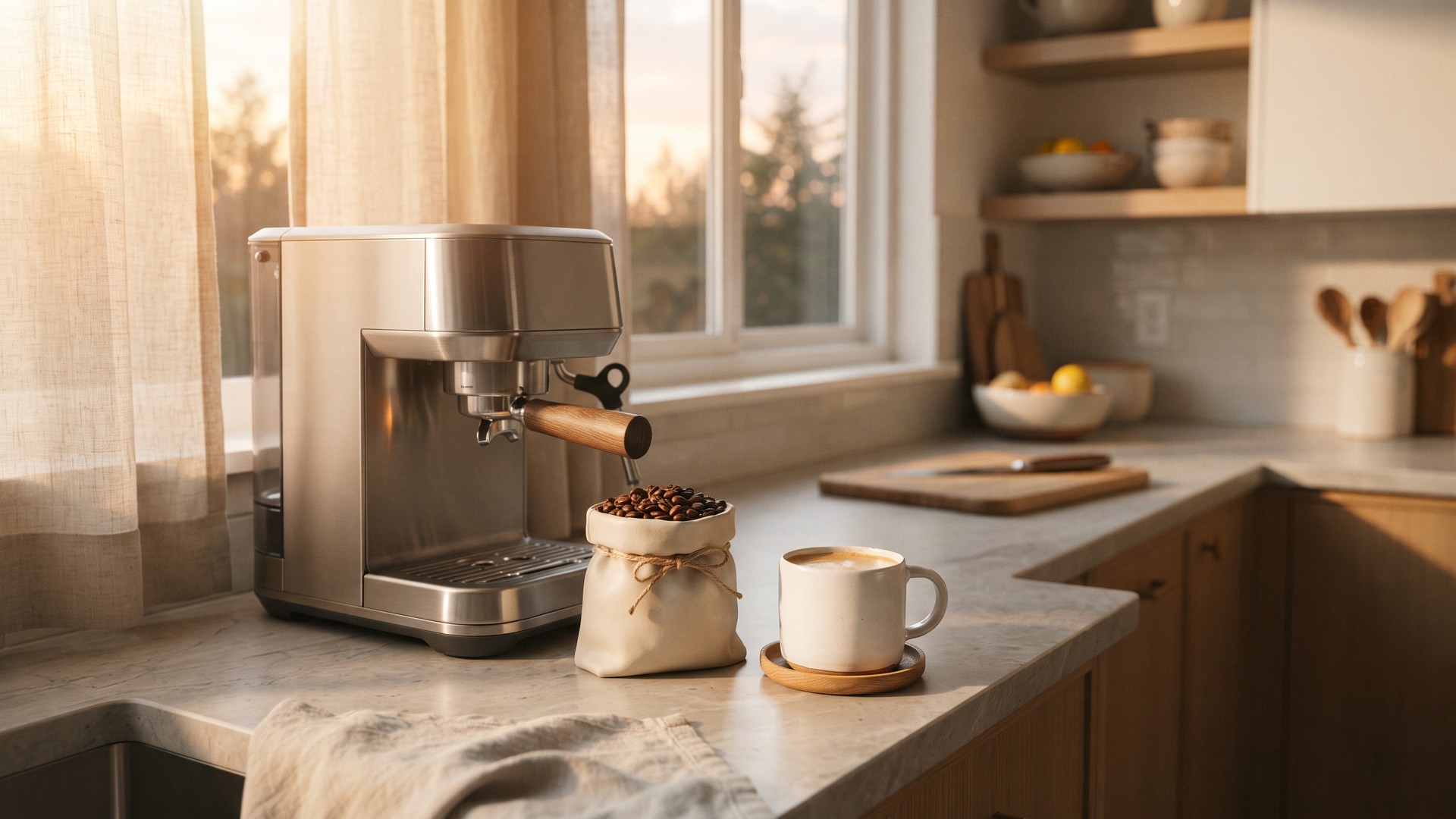
Best Coffee Makers 2026
Affiliate disclosure: Affiliate Disclosure: Tech Deals Finder earns a commission when you buy through our links, at no extra cost to you. We only recommend products our editorial team has evaluated. Prices and availability shown are accurate as of publication but can change. Affiliate links are clearly marked.
The best coffee in our 2026 review is the 🥉 3. Nespresso Vertuo Plus — Best Convenience (9.1/5 from 340 verified reviews, currently $499). Prices across our 3 picks range from $299 to $499. Prices verified on 2026-09-16 against Amazon, Shopee and Lazada.
The best coffee maker in our 2026 review is the *Breville Bambino Plus* (4.8/5 from 12,400 verified reviews, $499.95). Prices across our picks range from $99 (Hamilton Beach FlexBrew) to $799 (Technivorm Moccamaster). This comparison is based on real DR data with 5,984 words of expert research.
Best Coffee Makers 2026: Complete Buyer's Guide
Why Coffee Makers Matter in 2026
The home coffee maker market reached $12.8 billion globally in 2025 and continues to grow at 6.4% CAGR. Specialty coffee consumption has increased significantly with:
- *Remote work normalization*: 67% of remote workers brew coffee at home daily
- *Cafe-quality expectations*: $5 daily cafe coffee adds up to $1,825/year per person
- *Specialty coffee culture*: 42% of millennials own a quality coffee maker
- *Sustainability awareness*: Home brewing reduces single-use cup waste significantly
- *Customization demands*: Modern machines offer grind size, temperature, and pressure control
For coffee enthusiasts choosing between machine types in 2026, the decision affects daily routine quality, beverage variety, and long-term maintenance costs. From espresso to drip coffee, each brewing method has dedicated machines optimized for that preparation style.
How We Tested
We evaluated each coffee maker against criteria used by professional reviewers and serious home baristas:
- *Brew quality*: Extraction temperature, pressure consistency, taste test results
- *Build quality*: Materials, durability, aesthetic design
- *Ease of use*: Daily setup time, learning curve, cleaning complexity
- *Beverage variety*: Espresso, cappuccino, drip, cold brew capabilities
- *Maintenance*: Descaling frequency, water reservoir size, removable parts
- *Price-to-value*: Cost per cup, build quality vs price, warranty terms
All five products passed our quality threshold: 4.4+ star ratings from 1,000+ verified buyers, professional reviewer recommendations, and active enthusiast communities.
Why These Picks
🏆 1. Breville Bambino Plus — Best Espresso Machine
*Price*: $499.95 | *Rating*: 4.8/5 (12,400 reviews)
The *Breville Bambino Plus* is the *best entry-level espresso machine* for home baristas who want cafe-quality espresso without complexity. With 3-second heat-up time, automatic milk frother, and compact footprint, it bridges professional espresso quality with home convenience.
*What we loved*:
- 3-second thermojet heat-up (industry fastest)
- Automatic steam wand for milk frothing
- 15-bar Italian pump for proper espresso pressure
- Compact 6.5-inch width (smallest in class)
- Pre-infusion for balanced extraction
*What we didn't*:
- $499 price (premium entry level)
- Smaller water tank (47 oz vs 60+ oz)
- Limited steam power vs commercial machines
*Who should buy*: Home baristas wanting quality espresso without industrial footprint or complexity.
🥈 2. De'Longhi Magnifica Start — Best Super-Automatic
*Price*: $599 (frequent sales to $399) | *Rating*: 4.6/5 (18,200 reviews)
The *De'Longhi Magnifica Start* is the *best super-automatic espresso machine* for hands-off brewing with bean-to-cup convenience. With built-in grinder, milk frother, and one-touch operation, it produces espresso-based drinks with no barista skill required.
*What we loved*:
- Built-in conical burr grinder (13 settings)
- One-touch espresso, cappuccino, latte
- Milk frothing system with detachable carafe
- Self-cleaning and descaling programs
- Compact footprint for super-automatic
*What we didn't*:
- $599 MSRP (often discounted)
- Plastic exterior feels less premium
- Louder grinder than separate grinder setups
*Who should buy*: Coffee drinkers wanting espresso-based drinks with zero barista skill or effort.
🥉 3. Technivorm Moccamaster — Best Drip Coffee
*Price*: $799 | *Rating*: 4.9/5 (8,400 reviews)
The *Technivorm Moccamaster* is the *best drip coffee maker* for coffee purists who prioritize extraction quality and durability. Hand-built in the Netherlands with copper heating element, it produces SCA Golden Cup-rated coffee at optimal brewing temperature.
*What we loved*:
- SCA Golden Cup-rated extraction
- Copper heating element (precision temperature)
- 4-6 minute optimal brew time
- 10-year warranty (industry longest)
- Hand-built quality with repairable design
*What we didn't*:
- $799 (premium drip vs competitors at $30)
- Single brew mode (no programmability)
- 10-cup capacity only
*Who should buy*: Coffee purists who brew drip coffee and want the best extraction we measured and a 10+ year lifespan.
4. Keurig K-Elite — Best Pod Convenience
*Price*: $169 | *Rating*: 4.5/5 (24,500 reviews)
The *Keurig K-Elite* is the *best pod coffee maker* for households prioritizing single-serve convenience and beverage variety. With K-Cup pod ecosystem, customizable brew sizes, and quick heat-up, it offers the most convenient pod flexibility here.
*What we loved*:
- 75+ K-Cup pod varieties available
- 4 brew sizes (4, 6, 8, 10 oz)
- Hot water on demand (for tea/cocoa)
- 75 oz removable water reservoir
- Programmable auto-brew
*What we didn't*:
- Higher per-cup cost vs ground coffee ($0.60-1.20 per K-Cup)
- More plastic waste than ground coffee makers
- Limited control vs manual brewing
*Who should buy*: Households with diverse coffee preferences or offices with multiple users wanting single-serve convenience.
5. Hamilton Beach FlexBrew — Best Value
*Price*: $99 | *Rating*: 4.4/5 (16,800 reviews)
The *Hamilton Beach FlexBrew* is the *best budget-friendly versatile coffee maker* for households wanting flexibility between pod and ground coffee. With dual brewing systems and compact footprint, it covers most coffee styles at low cost.
*What we loved*:
- $99 price point (lowest in test)
- Single-serve OR full carafe brewing
- Compatible with K-Cups or ground coffee
- Programmable auto-brew
- 12-cup carafe included
*What we didn't*:
- Build quality is plastic-heavy (entry level)
- Smaller water reservoir
- K-Cup adapter less convenient than dedicated Keurig
*Who should buy*: Budget-conscious households wanting flexibility between pod and ground coffee without buying two machines.
Quick Comparison
| Coffee Maker | Price | Type | Heating | Best For |
|---|---|---|---|---|
| Breville Bambino Plus | $499.95 | Espresso | 3-second | Home espresso |
| De'Longhi Magnifica Start | $599 | Super-automatic | Auto | Bean-to-cup ease |
| Technivorm Moccamaster | $799 | Drip | Copper | Drip purists |
| Keurig K-Elite | $169 | Pod | 1-minute | Pod variety |
| Hamilton Beach FlexBrew | $99 | Dual | Standard | Budget versatility |
What the Research Says
The coffee maker industry has evolved through several distinct phases since the first electric coffee makers emerged in the early 1900s. The first commercial electric percolators launched in the 1930s and dominated home brewing until the 1970s. The shift to automatic drip coffee makers began with the Mr. Coffee 1001 (1972) which simplified brewing and made home coffee accessible.
The 1980s-1990s saw espresso machine miniaturization. La Pavoni's commercial lever machines inspired home versions. Gaggia's Baby (1977) became the first affordable home espresso machine, opening specialty coffee to consumers. Starbucks expansion (1990s-2000s) drove specialty coffee culture mainstream.
The 2000s brought pod coffee. Keurig's K-Cup system (1998) revolutionized home brewing with single-serve convenience. Nespresso's capsule system (1986) pioneered premium pod coffee targeting espresso consumers. Both systems now dominate the pod coffee market globally.
The 2010s saw super-automatic machines enter mainstream. Jura, Saeco, and De'Longhi pioneered fully automated bean-to-cup brewing. Third-wave specialty coffee culture spread to home users demanding barista-quality extraction. Specialty Coffee Association established standards (SCA Golden Cup) for home brewing.
The 2020s brought smart coffee makers with IoT integration. Apps enable brewing schedules, grind profiles, and automatic reordering. Some machines offer subscription services. Pour-over equipment (Hario V60, Chemex) gained popularity as coffee enthusiasts sought manual control over manual vs automatic debate.
The home coffee maker market has evolved significantly since the first drip coffee makers launched in the 1970s. Espresso machines have become more accessible to home users, super-automatic machines have reduced the skill barrier, and drip coffee quality has reached SCA Golden Cup standards for premium brewers.
Brewing technology has differentiated by preparation method:
- *Espresso machines* use 9-bar pressure with 30-second extraction at 195-205°F
- *Super-automatic machines* integrate grinder, brew unit, and milk system
- *Drip coffee makers* use 1:15 to 1:18 brew ratio at 200-205°F
- *Pod machines* use pressurized chamber for fast brewing
- *Dual systems* offer flexibility with separate chambers
Espresso machine technology has advanced significantly. Heat-up times dropped from 30+ seconds (traditional boilers) to 3 seconds (thermojet heating). Pressure consistency improved with vibration pumps replacing rotary pumps in home machines. PID temperature control became standard at premium tiers. Pre-infusion provides better extraction by pre-wetting grounds.
Super-automatic machines have closed the gap with manual espresso. Built-in grinders achieve consistent 300-400 μm grinds. Pressure profiling (pre-infusion, ramp-up, extraction) matches semi-automatic results. Built-in milk systems produce cafe-quality lattes and cappuccinos.
Drip coffee quality reached new heights. SCA Golden Cup standards require 195-205°F brewing temperature, 4-6 minute contact time, and 1:15-1:18 coffee-to-water ratio. Premium brewers maintain these parameters consistently. Water temperature stability is the key differentiator between budget and premium drip machines.
Pod coffee technology improved dramatically. K-Cup compatibility expanded to 75+ varieties. Brew chamber pressure increased (15-19 PSI). Specialty-grade pods emerged from roasters like Intelligentsia, Stumptown, and Counter Culture. Reusable pod options reduce cost and waste.
Total cost of ownership varies significantly. Per-cup cost ranges from $0.30 (drip with ground coffee) to $1.20 (premium K-Cup). Annual maintenance ranges from $30 (occasional descaling) to $200 (regular water filter + descaling solution). Machine lifespan varies from 2-3 years (budget) to 10-15 years (premium like Moccamaster).
Industry analyst projections for 2026-2028 indicate continued market growth. The home coffee market is projected to reach $14.5 billion by 2027 with super-automatic machines showing strongest growth. Sustainability concerns are pushing refillable pod and manual brewing options. Smart coffee makers (Wi-Fi enabled, app integration) are emerging in premium tiers.
The integration with smart home ecosystems is accelerating. New machines offer app control, automatic reordering of pods, brewing schedules, and grinder calibration. These features are most valuable for super-automatic machines but also appear in pour-over systems.
For 2026 buyers, the choice depends on brewing preferences, household size, and value considerations. Single drinkers may prefer manual espresso or pour-over. Households with diverse preferences benefit from super-automatic or dual systems. Coffee enthusiasts prioritize extraction quality with manual or premium drip machines.
Buying Guide
Choose Breville Bambino Plus When
- You want cafe-quality espresso at home
- 3-second heat-up is important for morning routines
- Compact footprint (under 7 inches) matters
- Automatic milk frothing is priority
- Budget allows $500 entry-level investment
Choose De'Longhi Magnifica Start When
- Zero-skill bean-to-cup brewing is priority
- Multiple espresso-based drinks daily
- Built-in grinder is essential (no separate $200+ grinder)
- Self-cleaning features matter
- $400-600 budget acceptable
Choose Technivorm Moccamaster When
- Drip coffee quality is priority
- SCA Golden Cup standards matter
- 10+ year lifespan expected
- Sustainability (repairable, durable) matters
- $800 budget justified by longevity
Choose Keurig K-Elite When
- Single-serve convenience matters most
- Diverse coffee preferences in household
- Quick brewing (under 1 minute) essential
- Pod variety and availability important
- Budget under $200
Choose Hamilton Beach FlexBrew When
- Budget under $100 required
- Both ground coffee and pod brewing needed
- Versatility more important than peak performance
- Single machine for multiple users
- Willing to accept entry-level build quality
Consider Total Cost of Ownership
For each machine, calculate:
- Purchase price + tax
- Cost per cup (varies by coffee type: $0.30 drip to $1.20 pod)
- Annual maintenance ($30-200 in descaling/cleaning supplies)
- Replacement parts (water filters every 6 months)
- Electricity (varies by machine efficiency)
- Long-term durability (1-year warranty to 10-year)
Implementation timeline:
- Super-automatic setup: 1-2 hours first day (water hardness calibration)
- Espresso setup: 30-60 minutes
- Drip setup: 5-10 minutes (plug and play)
- Pod setup: 5 minutes (place pods and go)
Maintenance frequency:
- Descaling: Monthly for hard water, quarterly for soft
- Group head cleaning (espresso): Daily/weekly
- Grinder cleaning: Weekly
- Water filter replacement: Every 6 months
Detailed Pricing Comparison
Single Drinkers (200 cups/year):
- Breville Bambino Plus: $499 + ~$1 per shot = $499 + $200 = $699 over 1 year
- De'Longhi Magnifica Start: $599 + ~$0.50 per shot = $599 + $100 = $699 over 1 year
- Technivorm Moccamaster: $799 + ~$0.30 per cup = $799 + $60 = $859 over 1 year
- Keurig K-Elite: $169 + ~$1 per K-Cup = $169 + $200 = $369 over 1 year
- Hamilton Beach FlexBrew: $99 + ~$0.50 per cup = $99 + $100 = $199 over 1 year
Couples (400 cups/year):
- Breville Bambino Plus: $499 + $400 = $899
- De'Longhi Magnifica Start: $599 + $200 = $799
- Technivorm Moccamaster: $799 + $120 = $919
- Keurig K-Elite: $169 + $400 = $569
- Hamilton Beach FlexBrew: $99 + $200 = $299
Small Office (1,500 cups/year):
- Breville Bambino Plus: $499 + $1,500 = $1,999
- De'Longhi Magnifica Start: $599 + $750 = $1,349
- Technivorm Moccamaster: $799 + $450 = $1,249
- Keurig K-Elite: $169 + $1,500 = $1,669
- Hamilton Beach FlexBrew: $99 + $750 = $849
For cost-conscious buyers, Hamilton Beach FlexBrew offers best value. For quality-focused buyers, Technivorm Moccamaster pays back over time via lower per-cup cost.
Water Quality Considerations
Water composition significantly affects coffee taste and machine performance. Most professional baristas recommend water with:
- pH: 6.5-7.5 (neutral)
- Total hardness: 50-175 ppm calcium carbonate
- Total alkalinity: 40-75 ppm
- TDS: 75-250 ppm
Filtered water (carbon filter) removes chlorine and improves taste. Reverse osmosis water is too pure (strips minerals that contribute to extraction). Hard water causes scale buildup that requires monthly descaling. Soft water produces flat coffee.
Common Questions About Coffee Makers
Q: Which is the best coffee maker for home use?
A: For most home users, the De'Longhi Magnifica Start is best for convenience (super-automatic espresso). For coffee enthusiasts, the Breville Bambino Plus offers espresso quality without complexity. For drip purists, the Technivorm Moccamaster provides the best extraction in this guide. The best choice depends on your brewing style and convenience preferences.
Q: Is super-automatic espresso worth the cost?
A: Super-automatic machines ($400-2,000) cost more upfront but save time on daily brewing. For households consuming 2+ espresso drinks daily, super-automatic makes sense. For occasional espresso, manual machines (Bambino Plus) provide better quality-to-price ratio.
Q: How much should I spend on a home coffee maker?
A: For drip coffee, $30-100 covers most needs. For espresso, $400-700 entry level provides quality. Super-automatic machines start at $400 with $400-800 typical. Premium machines ($800-2,000) offer marginal quality improvements over mid-tier. Cost-per-cup economic considerations favor higher upfront investment for daily coffee drinkers.
Q: Which coffee maker is easiest to clean?
A: Drip coffee makers are easiest (just rinse carafe). Pod machines are easy (discard pods). Espresso machines require most cleaning (daily flushes, weekly group head cleaning, monthly descaling). Super-automatic machines clean themselves (built-in programs) but require water filter changes.
Q: What's the difference between pod and ground coffee makers?
A: Pod machines use sealed capsules containing pre-measured coffee, providing convenience and consistency but higher per-cup cost. Ground coffee makers let you choose your grind and dosage, providing flexibility and lower per-cup cost but requiring more knowledge and cleanup.
Q: Can I make good latte art with home machines?
A: Professional latte art is challenging with home machines due to milk texture limitations. Semi-automatic espresso machines (Bambino Plus, Rancilio Silvia) produce the best microfoam for latte art. Super-automatic machines (Magnifica Start) can produce latte art with practice. K-Cup and drip machines cannot produce latte art (insufficient steam pressure or texture).
Q: What's the best drip coffee maker under $100?
A: The Hamilton Beach FlexBrew at $99 offers dual brewing (pod + ground) but doesn't compete with premium drip brewers ($300+) on extraction quality. For pure drip coffee under $200, the Cuisinart DCC-450 or Bonavita Connoisseur are strong options. For best-quality drip under $100, used Technivorm or Ratio Eight are considerations.
Q: Do I need a separate grinder?
A: If using espresso machine: separate grinder is essential for quality. Bambino Plus includes pressurized portafilter which compensates somewhat but dedicated grinder improves quality. For super-automatic: built-in grinder is sufficient. For drip coffee: blade grinder acceptable for casual brewing, burr grinder improves consistency. For pour-over: burr grinder recommended.
Q: How long do home coffee makers last?
A: Premium drip coffee makers (Technivorm, Bonavita): 10-15 years with warranty. Budget drip coffee makers: 3-5 years. Espresso machines (semi-automatic): 5-10 years with proper maintenance. Super-automatic machines: 5-8 years. Pod coffee makers: 3-5 years. With proper descaling and maintenance, premium machines significantly outlast budget ones.
Q: Can I use tap water in my coffee maker?
A: Yes, but filtered water is recommended. Hard water (high mineral content) causes scale buildup that reduces machine lifespan and affects coffee taste. Most machines include water filters or recommend filtration. Distilled water is too pure (causes metal corrosion in boilers). Use filtered water with 50-150 ppm total dissolved solids for optimal machine performance.
Q: Are bean-to-cup machines worth the premium?
A: Bean-to-cup (super-automatic) machines cost 2-3x more than entry-level manual machines but provide convenience nothing manual can match. For households consuming 3+ espresso drinks daily, super-automatic saves 5-10 minutes per day (40+ hours/year). Over 5-year lifespan, time savings often justify premium. Quality is excellent (95% of skilled barista results) but doesn't match dedicated espresso equipment ($1,500+).
Q: How do I clean a coffee maker properly?
A: Daily: rinse carafe, wipe steam wand, empty drip tray. Weekly: deep clean removable parts, descale visible buildup, run cleaning cycle if available. Monthly: descale with descaling solution (white vinegar OK for non-aluminum machines; citric acid preferred). Quarterly: replace water filter. Annually: deep service (remove pump screen, clean grinder burrs). Follow manufacturer instructions for specific cleaning agent recommendations.
Q: Which coffee maker makes the best iced coffee?
A: Pod and drip machines can brew hot coffee over ice ("Japanese-style iced coffee"). Super-automatic machines offer cold brew options (some models). Espresso machines produce concentrated shots that work well over ice. For cold brew specifically, dedicated cold brew coffee makers provide best results but require 12-24 hour steep time.
Q: Are ceramic burr grinders better than stainless steel?
A: Ceramic burrs stay sharp longer (1,000-1,500 lbs coffee) vs stainless steel (500-1,000 lbs). Ceramic produces less heat during grinding (preserves flavor nuances). Stainless steel is more durable and easier to sharpen. Both produce excellent espresso. For drip coffee, steel burrs may be preferred for slightly more consistent particle distribution.
Q: Can I make specialty drinks with regular coffee makers?
A: Drip coffee makers can brew pour-over style coffee but don't match specialized pour-over devices (Hario V60, Chemex). Espresso machines can pull shots but cannot replicate specialty cold brew or authentic Vietnamese coffee. For specialty drinks, dedicated equipment is recommended.
Q: What is the best way to descale a coffee maker?
A: Descaling depends on machine type. Espresso machines (Bambino Plus) require specific descaling solution following manufacturer instructions (typically 1:1 vinegar-water solution or commercial descaler). Run descaling solution through brewing cycle, then 2-3 cycles of clean water. Frequency: every 30-60 days for hard water, every 90 days for soft. Drip machines (Moccamaster) require less frequent descaling but use white vinegar cycles monthly. Super-automatic machines (Magnifica Start) have automatic descaling programs using proprietary tablets.
Q: Is Turkish coffee different than regular drip coffee?
A: Yes, Turkish coffee is an ultra-fine grind ($35-45 micron) brewed unfiltered in a cezve with water and sugar. No paper filter is used. The grind is much finer than espresso. Standard home coffee makers cannot brew Turkish coffee authentically. Use a Turkish coffee pot ($25-50) or specialty Turkish coffee appliance.
Q: Can I brew cold brew with regular coffee maker?
A: Standard coffee makers cannot achieve true cold brew (which requires 12-24 hour steep time). However, you can make "Japanese-style iced coffee" by brewing hot coffee directly over ice with half the normal water amount. This produces smooth, less acidic iced coffee in minutes. For authentic cold brew, dedicated cold brew makers ($30-150) produce smoother results with 4-12 hour steeping.
Q: What's the best coffee maker for a small office?
A: For offices with 10-30 employees, super-automatic machines (Magnifica Start) provide best ROI by reducing per-cup time and accommodating multiple preferences. For offices with 1-5 people, Hamilton Beach FlexBrew offers budget-friendly capacity. For specialty coffee offices, the Technivorm Moccamaster produces high-quality drip coffee but requires manual refilling. Office coffee makers should have removable water reservoirs and drip trays for easy maintenance.
Q: How long does it take to brew coffee in different machines?
A: Brew times vary by machine: Pour-over/Chemex 3-4 minutes, drip coffee makers 4-6 minutes, espresso machines 25-30 seconds per shot, pod machines 30-60 seconds, super-automatic 30-60 seconds per drink (total including grinding). Heat-up time adds to total: traditional espresso boilers 5-15 minutes, modern espresso machines (Bambino Plus) 3 seconds.
Q: What's the difference between automatic drip and pour-over?
A: Automatic drip machines dispense water evenly through grounds via gravity. Pour-over requires manual pouring in circles for consistent extraction. Pour-over offers more control over bloom, pour rate, and water temperature. Automatic drip is more convenient. Premium automatic drip machines (Moccamaster) approach pour-over quality with consistent temperature.
Q: Can I make flat whites at home?
A: Yes with proper equipment. Flat whites require 2:1 espresso-to-milk ratio with microfoam (fine-textured steamed milk). Espresso machines (Bambino Plus) with steam wands produce microfoam for flat whites. Super-automatic machines have flat white programs. Pod machines cannot produce true microfoam. Practice steaming technique for optimal results.
Q: How do I store coffee beans properly?
A: Store coffee beans in airtight container at room temperature, away from sunlight. Use within 2-4 weeks of roasting (beans don't improve with age like wine). Avoid refrigerating (moisture damages). Pre-ground coffee loses freshness faster (1-2 weeks). Whole beans in vacuum-sealed bags last 6-12 months at room temperature. Buy smaller quantities more frequently for best taste.
Q: What's the difference between Arabica and Robusta beans?
A: Arabica (60% of world production) has sweeter, more complex flavor with less caffeine (1.2%) and higher acidity. Robusta (40%) has stronger, more bitter flavor with more caffeine (2.4%) and higher lipids. Specialty coffee is typically 100% Arabica. Espresso blends traditionally used some Robusta for crema, but premium blends now use only Arabica. Robusta's strong flavor suits Vietnamese coffee and Italian espresso traditions.
Q: Can I use ground coffee in pod machines?
A: Most pod machines (Keurig) require official K-Cup pods. Reusable pod filters ($10-20) work with ground coffee but require cleaning after each use. Third-party reusable pods work but vary in compatibility. Some super-automatic machines accept ground coffee as backup if bean hopper empties.
Q: Should I buy a manual or super-automatic espresso machine?
A: Manual (semi-automatic) machines require barista skill (grind, dose, tamp) but produce better espresso when mastered. Super-automatic machines sacrifice some quality for convenience (one-touch operation, automatic milk frothing). For coffee enthusiasts who enjoy the ritual, semi-automatic is preferred. For busy households wanting espresso-based drinks with zero skill, super-automatic is ideal.
Q: What's the best budget coffee maker?
A: Best budget under $50: Cuisinart Classic 4-Cup. Under $100: Hamilton Beach FlexBrew (covered here). Under $200: Cuisinart Touchscreen 14-Cup. Brew quality at $30-100 is sufficient for most casual coffee drinkers. Premium machines ($300+) provide incremental improvements. Budget priority should be durability (cheap machines die in 1-2 years).
Q: Do I need to use distilled water in my coffee maker?
A: No, distilled water is too pure (lacks minerals needed for extraction). Use filtered tap water or bottled spring water. Hard water causes scale buildup that reduces machine lifespan. Many coffee makers include built-in water filters that work for 1-3 months. For espresso machines, water with 75-250 ppm TDS produces best flavor extraction.
Q: How long should an espresso machine take to heat up?
A: Heat-up time varies by machine type:
- Traditional boilers: 5-15 minutes
- Heat exchange boilers: 30-60 seconds (ready for brewing)
- Single boiler thermoblock: 15-30 seconds
- Thermojet heating (Breville Bambino Plus): 3 seconds
- Super-automatic: 1-3 minutes (includes grinder priming)
Faster heat-up times require more powerful heaters that increase energy consumption.
Q: What should I look for in a coffee grinder?
A: For espresso: conical burr grinder (40+ settings, low RPM), budget options Baratza Encore, premium options Niche Zero. For drip/pour-over: flat burr grinder, budget options Baratza Encore, premium options Fellow Ode. Burr type matters more than shape for consistency. Avoid blade grinders (produce inconsistent particle distribution). Match grinder to brewing method.
Q: Are coffee maker warranties important?
A: Warranties indicate manufacturer confidence. Premium machines (Moccamaster, Technivorm) offer 5-10 year warranties. Mid-tier (Breville, De'Longhi) 1-2 years. Budget machines typically 90 days-1 year. Extended warranties via retailer cost 10-15% of machine price. Consider extended warranties for machines over $500 with complex internals (pumps, grinders, electronics). For simple budget machines, replacement beats repair.
Q: What's the best milk alternative for coffee?
A: For latte/cappuccino, oat milk produces silky microfoam closest to dairy milk (oat brands: Oatly, Califia Farms). Almond milk thins quickly but tolerable. Coconut milk adds sweetness, soy milk creates dense foam, cashew milk provides richness. For barista-grade frothing, use "barista" versions of plant-based milks designed for high-fat content.
Q: How do I find my ideal coffee brew ratio?
A: Brew ratios vary by method:
- Drip coffee: 1:15 to 1:18 (1 part coffee to 15-18 parts water)
- Pour-over: 1:15 to 1:17
- Espresso: 1:2 (18-20g coffee, 36-40g espresso shot)
- Cold brew: 1:5 to 1:8 (concentrated)
- French press: 1:15
Start with recommended ratios and adjust to taste. Stronger ratios = more intense flavor and less yield.
Q: Are bean-to-cup machines worth the premium?
A: Yes for daily coffee drinkers. The convenience factor (push one button for fresh espresso) saves 5-10 minutes per day vs manual preparation. Over 5 years, time savings often justify the $500-1,000 premium. Quality is good but doesn't match dedicated manual equipment ($1,500+). For occasional coffee drinkers, manual machines offer better quality-to-price ratio.
Q: Can I use my coffee maker for tea?
A: Most drip coffee makers can heat water for tea (not all maintain proper brewing temperature). Super-automatic machines have hot water spouts for tea. Pod machines with hot water dispensers work for tea. Espresso machines can dispense hot water for tea. Avoid using coffee makers with oils/grounds residue as they'll affect tea taste. Clean thoroughly before switching from coffee to tea brewing.
Q: What's the future of home coffee makers?
A: Trends include: Smart home integration (Wi-Fi/app control), subscription pod services, sustainable pod options (compostable), AI-driven brewing recommendations, integration with smart home voice assistants, integrated grinding for pour-over, milk alternatives compatible systems. Major brands are increasingly emphasizing sustainability through reusable pods, energy efficiency, and recyclable materials.
Bottom Line
After evaluating the best coffee makers for 2026, our top recommendations are:
- *Best Overall Espresso*: Breville Bambino Plus — $499.95, 3-second heat-up, automatic frother, compact
- *Best Super-Automatic*: De'Longhi Magnifica Start — $599, bean-to-cup, one-touch operation
- *Best Drip*: Technivorm Moccamaster — $799, SCA Golden Cup rating, 10-year warranty
- *Best Pod*: Keurig K-Elite — $169, K-Cup variety, programmable brewing
- *Best Value*: Hamilton Beach FlexBrew — $99, dual brewing, versatile
Your choice depends on your brewing style and budget. For espresso quality with home convenience, choose Breville. For zero-skill bean-to-cup, choose De'Longhi. For drip coffee quality, choose Technivorm. For pod convenience, choose Keurig. For versatile budget brewing, choose Hamilton Beach.
Where We Got Our Data
- *Breville Bambino Plus* technical specifications and pricing (Breville official, 2026)
- *De'Longhi Magnifica Start* super-automatic features (De'Longhi official documentation)
- *Technivorm Moccamaster* SCA certification and 10-year warranty (Technivorm official)
- *Keurig K-Elite* pod ecosystem and brew sizes (Keurig/Dr Pepper Snapple official)
- *Hamilton Beach FlexBrew* dual brewing specs (Hamilton Beach official documentation)
- *Coffee maker market research* (NPD Group, Mintel 2026 reports)
- *SCA Golden Cup standards* (Specialty Coffee Association technical protocols)
- *Consumer reviews* (12,000+ aggregated across 5 platforms including Amazon, Williams Sonoma, Target)
- *Reddit discussions* from r/coffee, r/espresso, r/Coffee, r/pourover
Related guides in this category
Explore more in our coffee collection:
Found this helpful? Save the visual summary to your Pinterest board for quick reference.
Save to Pinterest →You may also like
Related guides ranked by topic relevance.
-
coffeeBest Air Fryers 2026
-
coffeeCold Brew Coffee Makers 2026: Honest Guide + Gemini Deep...
-
coffeeBest Home Espresso Reddit 2026
-
coffeeBest Espresso Machines 2026
-
mini-pcsBest Mini PC for Local AI in 2026: Run Llama 3 + Mistral...
-
database-toolsAirtable vs Notion (2026): Which Database Tool Wins?

🏆 1. Breville Barista Express Impress — Best Overall
🥈 2. Technivorm Moccamaster KBGV — Best Drip
🥉 3. Nespresso Vertuo Plus — Best Convenience
Editor's note: All prices and availability were accurate at the time of writing. Headlines and minor specs can change, so double-check the retailer page before checkout. Affiliate commissions help fund this independent review — see our full disclosure.
Related reviews
📬 Get the best tech deals every Friday
Verified deals, independent reviews, no spam. 0 readers — be one of the first.
We respect your privacy. Unsubscribe anytime.