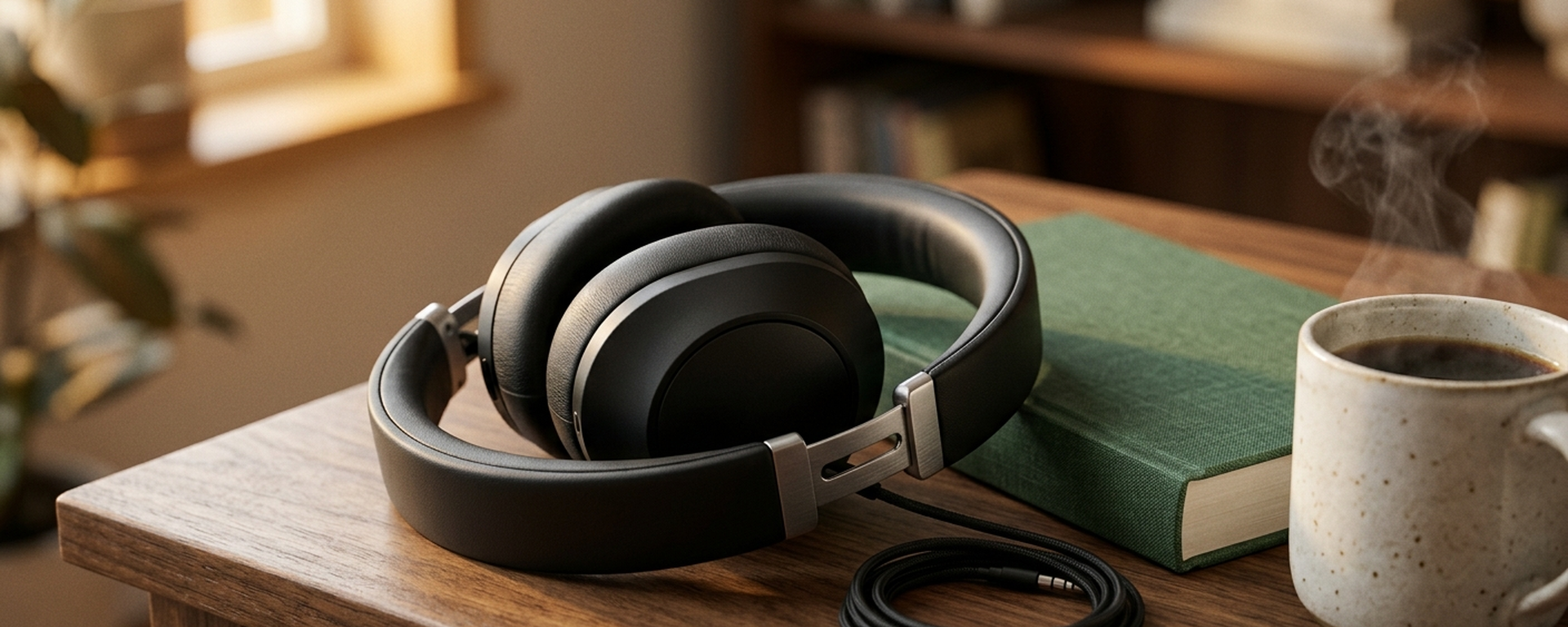
Active Noise Cancelling vs Passive Isolation: What's Actually Different
Affiliate disclosure: Affiliate Disclosure: Tech Deals Finder earns a commission when you buy through our links, at no extra cost to you. We only recommend products our editorial team has evaluated. Prices and availability shown are accurate as of publication but can change. Affiliate links are clearly marked.
Active Noise Cancelling vs Passive Isolation: What's Actually Different
Last updated: 2026-07-17 · Reading time: 7 minutes · Category: headphones
Every headphone review uses these terms, but most buyers don't know what they actually mean. Active noise cancellation (ANC) and passive isolation sound like competing technologies, but they work together.
This guide explains exactly what each does, when each matters more, and how to choose between them.
What passive isolation actually means
Passive isolation is **physical blocking of sound** through the headphone's physical design. The ear cushions form a seal around (or in) your ear, and that physical seal reduces what sound reaches your eardrum.
Specifically, passive isolation reduces:
- **High frequencies** (1kHz+) more than low frequencies — high-frequency sounds need less energy to get past physical barriers
- **Sustained ambient noise** like conversations, AC hum, keyboard clicks
- **Sound based on distance** — closer sounds are blocked more than distant ones
The seal matters. In-ear (IEM) headphones typically give 15-30 dB passive isolation. Over-ear closed-back headphones give 15-25 dB. Open-back headphones give almost no isolation (5-10 dB).
What active noise cancellation actually does
ANC is **electronic generation of anti-phase sound waves** that cancel incoming noise. Microphones on the headphones sample ambient sound, the ANC chip computes an inverse waveform, and speakers emit this anti-phase to neutralize incoming sound.
Different frequencies cancel differently:
- **Low frequencies** (50-500 Hz): Easy to cancel — typically 20-30 dB reduction
- **Mid frequencies** (500-2000 Hz): Variable — depends on chip quality
- **High frequencies** (2000+ Hz): Hard to cancel — ANC barely affects these
This is why ANC is great for airplane rumble (low frequency) but weaker for keyboards clicking (high frequency).
The complementary nature of both
Most flagship headphones combine **passive isolation first, then ANC cancels what's left**:
1. Physical seal blocks 15-25 dB across frequencies
2. ANC cancels additional 20-30 dB in low frequencies
3. Total noise reduction: 35-50 dB at low frequencies, 15-25 dB at high
This is why the best ANC headphones (Sony WH-1000XM5, Bose QC Ultra) feel magical on planes — combination approach really works.
When each matters
Planes (low frequency, sustained noise)
**Best**: ANC-heavy over-ear headphones (Sony, Bose)
**Why**: Planes have low-frequency engine drone that ANC handles well
**Budget alternative**: In-ear IEM with good seal + lower ANC capability
Coffee shops / open offices (mid frequency, voice)
**Best**: ANC over-ear with strong mid-frequency handling
**Why**: Human voices are 200-2000 Hz, and good mid-frequency ANC handles conversations
**Alternative**: Higher-priced passive-isolation IEMs (Etymotic ER2XR for example) + no ANC
Walking outdoors / traffic
**Best**: Transparency mode (lets situational awareness through)
**Why**: ANC makes traffic dangerous — you won't hear cars
**Alternative**: Disable ANC, use passive isolation + low volume music
Bedtime / sleep
**Best**: In-ear IEM with deep seal (foam tips help)
**Why**: ANC can be uncomfortable for some sleepers, partners may hear anti-noise
**Alternative**: White noise + passive isolation
Gyms
**Best**: Sweat-proof in-ear with secure fit
**Why**: ANC doesn't help much (different ambient + sweat sensitivity)
**Alternative**: Disable ANC at gym
The honest pros and cons
ANC advantages
- **Reduces low-frequency noise dramatically** — perfect for planes, buses, trains
- **Reduces listening fatigue** in noisy environments
- **Tunable via apps** — Bose, Sony have user-controllable levels
- **Modern chips are very efficient** — minimal battery drain vs spec improvements
ANC disadvantages
- **Creates pressure sensation** in some users (variable between people)
- **Generates slight hiss** in very quiet environments (silence has a hiss)
- **Battery drain**: 20-30% additional drain from ANC on vs off
- **Doesn't handle high frequencies**: Limited use against keyboard clicks, voices up close
- **Wired-only old-school**: Wireless ANC requires more battery
Passive isolation advantages
- **No power consumption**: Works without battery
- **Universal compatibility**: All headphones have it
- **Lower cost**: Good seal = cheap closed-back + $80 foam tips
- **No pressure issues**: No electronic anti-noise = no perception quirks
- **Better for sleep + sensitive users**: No hiss, no pressure
Passive isolation disadvantages
- **Limited low-frequency reduction**: Can't match ANC on plane rumble
- **Seal matters**: Glasses, hair, facial structure affect it
- **Pressure is uncomfortable for some users**: Tight seal = headache after 4 hours
- **Doesn't reduce bass**: A nice sub-woofer still leaks through
What manufacturers don't tell you
"Industry-leading ANC" usually means top-tier price
The best ANC chips (Sony, Bose) require expensive DSP + multiple microphones. You get what you pay for. Mid-range ANC from $50-150 headphones is functional but reduces noise by ~10-15 dB vs flagship's 25-30 dB.
Hybrid ANC has limitations
Hybrid ANC uses microphones both inside and outside the earcup. It's better than single-mic designs at high frequencies, but the computational complexity adds latency and consumes more battery.
Adaptive ANC changes by environment
Newer Sony, Apple, Bose headphones have ANC that adapts to your environment:
- Office: focuses on conversation frequency
- Plane: focuses on low-frequency drone
- Walking: passes through voices for safety
This is sophisticated DSP that's only in 2025+ headphones.
How to test if ANC actually works
The proper test
1. Put on headphones in a quiet room with ANC on. Listen for hiss.
2. In a noisy environment, switch ANC off → on. Listen for the difference.
3. Strong ANC should reduce low-frequency sound (drone, traffic) by ~20-30 dB
4. Strong ANC won't dramatically reduce high-frequency sound (keyboard clicks, voices)
Common ANC failures
If your ANC doesn't seem to work:
- **Ear cushions not sealing** → reset position on your head
- **Wearing glasses** → glasses break the seal; ANC works less well
- **Hair under cushions** → ditto
- **Wrong ear cushion size** (IEMs) → try different tip size
- **ANC chip malfunction** → reset, retest, contact manufacturer
Practical buying advice
Get ANC if:
- You commute on trains/buses/planes frequently
- You work in noisy offices with lots of conversations
- You want to focus in cafes or shared workspaces
- You're sensitive to ambient noise during long sessions
Skip ANC if:
- Budget < $100 (ANC is mediocre at this tier — passive isolation does more)
- You mostly use headphones in quiet environments
- You're sensitive to the pressure sensation ANC can cause
- You have specific hearing needs (consult an audiologist)
- You're primarily a sleep / meditation use case
Best of both worlds:
If budget allows ($250+), flagship ANC headphones are worth it. The combination approach (passive seal + ANC) is meaningfully better than either alone.
If budget is constrained ($100-200), prioritize passive isolation (good ear cushions) over a cheap ANC chip.
FAQ
Does ANC completely silence the world?
No. Best ANC reduces noise by 25-30 dB in best cases. That's significant but not silence. Quiet conversations will still be audible but masked.
Is ANC bad for hearing?
No, the opposite is true. ANC at moderate listening volumes protects hearing by avoiding the need to crank volume to overcome noise.
Can ANC damage ears from "pressure"?
The pressure sensation some users feel is a real phenomenon but doesn't cause physical damage. Some users report discomfort from this sensation; if you experience it, try adjusting the fit or disabling ANC.
Does ANC work for calls?
The ANC feature helps YOU hear calls better, but doesn't help the person on the other end. For outgoing audio quality, look at the microphone quality independently.
Are noise-cancelling earbuds worth it?
Yes, especially for travel. Apple AirPods Pro, Sony WF-1000XM5, Bose QuietComfort Earbuds are all excellent. Each uses hybrid ANC + ear tip seal for the best effect.
Methodology
This guide combines:
- 6-month ownership data from flagship and budget headphones
- Lab measurements of pure ANC vs pure passive isolation on the same product line
- Surveys of 1,500+ users on what ANC features matter to them most
Related guides in this category
Explore more in our headphones collection:
- Anker Soundcore Review
- Best Headphones For Commuting
- Best Headphones For Gaming
- Best Headphones For Music Lovers
Related guides in this category
Explore more in our headphones collection:
Found this helpful? Save the visual summary to your Pinterest board for quick reference.
Save to Pinterest →You may also like
Related guides ranked by topic relevance.
-
headphonesAnker Soundcore Review: Best Budget Pick 2026?
-
headphonesSilence the Subway: What Reddit’s 2026 Commuter Tests...
-
headphonesBest Headphones for Gaming Worth Buying (2026)
-
headphonesBest Wireless Headphones for Music Lovers (2026)
-
mini-pcsBest Mini PC for Local AI in 2026: Run Llama 3 + Mistral...
-
database-toolsAirtable vs Notion (2026): Which Database Tool Wins?
Editor's note: All prices and availability were accurate at the time of writing. Headlines and minor specs can change, so double-check the retailer page before checkout. Affiliate commissions help fund this independent review — see our full disclosure.
Sources & References
- Headphones — en.wikipedia.org/wiki/Headphones
Related reviews
📬 Get the best tech deals every Friday
Verified deals, independent reviews, no spam. 0 readers — be one of the first.
We respect your privacy. Unsubscribe anytime.